Thursday, January 28, 2016

FA4 CLASS-X

CLASS X FORMATIVE ASSESSMENT-4
MANAGEMENT OF NATURAL RESOURCES
DATE: ..................

  1. Identify the following items as biodegradable and non biodegradable.                                     Rubber, metals, plastic,earthen pot.
  2.  The green plants in terrestrial ecosystem capture about …. Percent of energy of sunlight. (1/10/100)
  3. What is the percentage of the amount of organism matter that is present at each step of the trophic level. (1/10/100)
  4. Complete the food chain. Grass---àGrass hopper---à…….--àsnake--à……
    (deer and lion/frog and vulture).
  5. A complex food chain forms a ………… (foodweb/foodnet/foodchains)
  6. Flow of energy in an ecosystem is from Producers to ……. (tertiary consumers/Herbivores)
  7. How many Oxygen atoms are there in an Ozone molecule. (2/3/4/5)
  8. Ozone is deadly………….. (poison/useful/useless)
  9. Ozone shields the surface of earth from harmful…….. rays. (UV/IR/VS)
  10. How is ozone layer formed in atmosphere?
  11.  Expand (a) CFC (b) UNEP
  12. Change in attitude also have role to play in managing the garbage waste. Discuss some methods to manage garbage in factory estate.
  13. Why plastic glasses were changed to kulhads.
  14. Name any two Biotic and abiotic components of pond ecosystem.


-------------


LINK FOR NCERT CLASS IX AND X PRACTICALS

LINK FOR CBSE CLASS IX PRACTICAL SKILLS SAMPLE PAPER

LINK FOR CBSE CLASS X PRACTICAL SKILLS SAMPLE PAPER


Friday, January 22, 2016

CLASS IX FORMATIVE ASSESSMENT-4
MANAGEMENT OF NATURAL RESOURCES
DATE: 21.01.2016
  • 1. ROLL NOS 1-20 WILL DRAW NITROGEN CYCLE AND21 TO 39 WILL DRAW CARBON CYCLE.(2)
  • 2.       Hot Air always rises (a) Up (b) down (c) Left (d) right (1)
  • 3.       Water cools down …………… than the land at night. (slower/faster). (1)
  • 4.       The fossil fuels contain small amount of …………. And …………
  • (Hydrogen and helium/sulphur and nitrogen/magnesium and strontium) (1)
  • 5.       ……….. is commonly found on the barks of trees as a thin greenishWhite  crust. (Micorrhizae/bacteria/Lichen) (1)
  • 6.       The factors that make soil are Sun , water, …… and ……….(wind and living organism/force and momentum/radiation and lightening) (1)
  • 7.       O2=Oxygen molecule  O3= ……………… (oleium/Ozone/opossum) (1)
  • 8.       Ozone layer has a hole in earths atmosphere. Name the continent  (Asia/Europe/Antarctica/South America) (1)

Tuesday, December 29, 2015

CHENNAI IN PICTURES

BIOTECHNOLOGY DEPARTMENT IIT CHENNAI
PLASTIC ROBOT
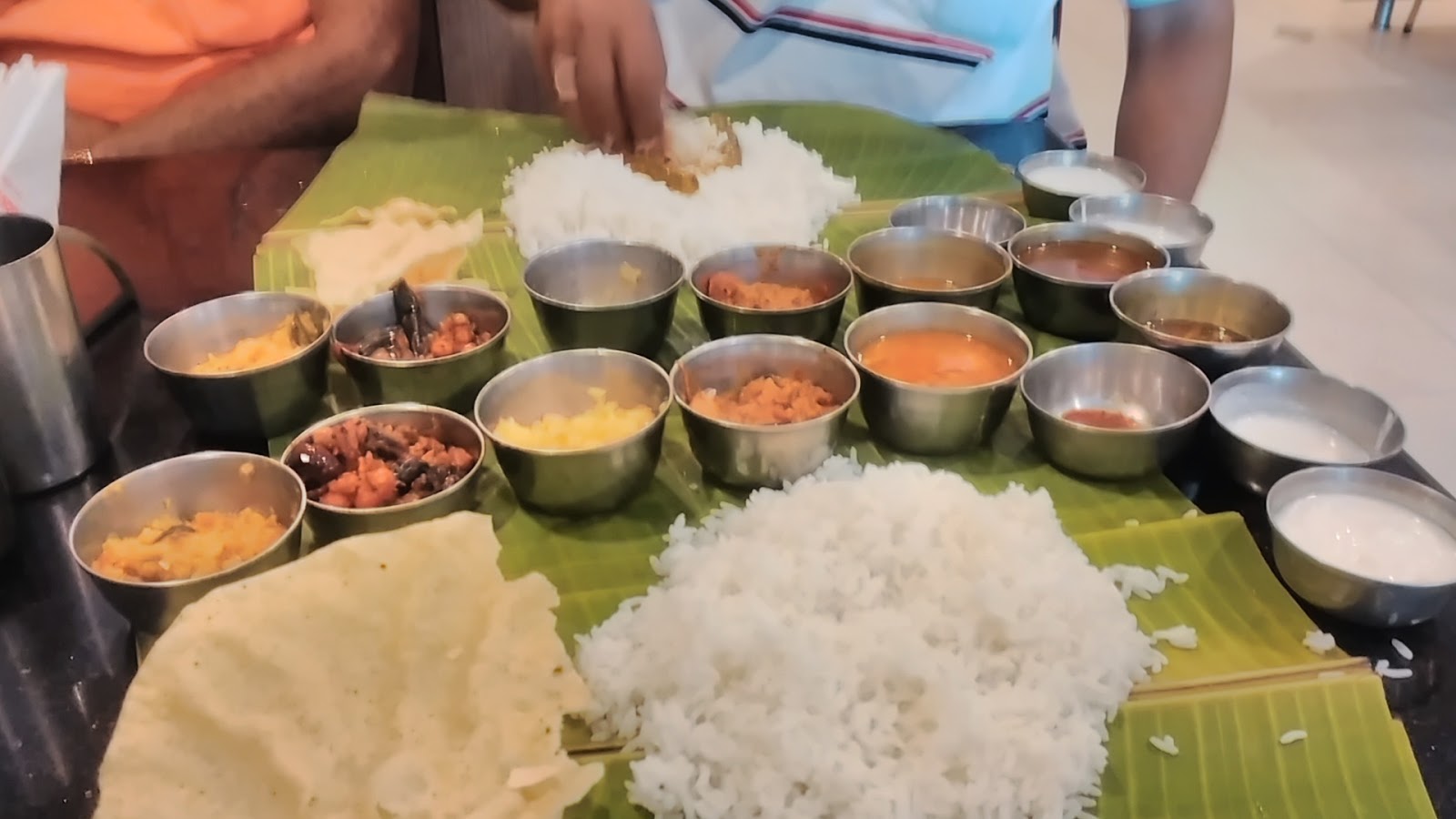
SOUTH INDIAN THALI IN CHENNAI
CHRISTMAS LIGHT IN A MALL
BIOTECHNOLOGY CONFERENCE HALL

Polymerase chain reaction machine

Biotechnology Dept IIT Madras

Friday, December 18, 2015

Molecular Basis of Inheritance

SALIENT FEATURES OF DNA

SALIENT FEATURES OF DNA

Gap-fill exercise

Fill in all the gaps, then press "Check" to check your answers. Use the "Hint" button to get a free letter if an answer is giving you trouble. You can also click on the "[?]" button to get a clue. Note that you will lose points if you ask for hints or clues!
1. DNA is made of two chains,where the backbone is constituted by sugar - phosphate , and the bases project inside.

2.The two chains have polarity. It means , if one chain has the polarity 5’-------> 3’ polarity, the other has
3’ 5’ polarity.

3. The bases in the two strands are paired through hydrogen bonds (H – bonds)forming base pairs ( bp). Adenine forms two H-bonds with Thymine from opposite strand and vice – versa. Similarly, Guanine is bonded with Cytisine with H-bonds. (As a result,always a purine comes opposite to a pyrimidine. This generates approximately uniform distance between the two strands of the helix)

4. The two chgains are coiled in a right – handed fashion. The pitch of the helix is 3.4nm and there are roughly in each turn.Consequently,the distance between a bp in a helixis approximately equal to 0.34 nm.

5. The plane of one base pair stacks over the other in double helix.This in addition to H-bonds, confers stability of the structures.

Thursday, December 10, 2015

Electron Transport System (ETS)

All NADH+H+ Produced during Glycolysis & Krebs cycle is oxidized by NADH-dehydrogenase and electrons are transported to Ubiquinone(UQ)via FMN.
In ETS, , Molecular Oxygen (O2)acts as terminal electron acceptor.
Electrons from NADH+H+ is transported through FMN, UQ (Hydrogen Carrier, Cytochromes(b,C1,C,a-a3) and finally to O2 which takes 2H+ from matrix and form H2O.
During transport of electron, proton (H+) is pumped by UQ to inter membrane space from matrix causing formation of proton gradient (due to increase in protons in inter membrane space and decrease in matrix).
Breaking of this gradient and return of these protons(H+)through ATP synthase/ Fo-F1 particle/ oxysomes located in inner membrane cause synthesis of ATP.
Since oxidation of NADH+H+ is the cause of formation of proton gradient and ATP synthesis thereupon, so this method of ATP synthesis is called as oxidative phosphorylation.
Return of 2H+ from inter membrane space to matrix through ATP synthase release sufficient energy to synthesise one ATP molecule.
On oxidation of 1 molecule of NADH+H+ pumps 6H+, therefore it produces 3 ATP molecules while oxidation of FADH2 pumps only 4H+, so it produces 2 ATP molecules.

Tuesday, December 08, 2015

PREVIOUS YEARS QUESTION PAPERS

CLASS XII BIOLOGY
PREVIOUS YEARS QUESTION PAPERS
scanning electron microscope


MATCH THE FOLLOWING

22. CHEMICAL COORDINATION AND INTEGRATION

22. CHEMICAL COORDINATION AND INTEGRATION

Matching exercise

Match the items on the right to the items on the left.
INSULIN
PROGESTERONE
ATRIAL NATRIURETIC FACTOR
THYMOSINS
OXYTOCIN

OTBA MATERIAL 2015-16 FOR DOWNLOAD

Sunday, December 06, 2015


REPRODUCTION CLASS -XII


REPRODUCTION IN ORGANISMS

REPRODUCTION IN ORGANISMS

Matching exercise

Match the items on the right to the items on the left.
Morphologically and genetically similar ogranisms
morphologically physiologically similar gametes
An Organism with male and female reproductive systems
Monoecious plants
Dioecious plants
bagging
PEC
scutellum
Cocunut water
endosperm completly consumed

Biology Quiz: Principles of Inheritance NEET-Style Quiz: Principles of Inheritanc...